
Gelcoat Guide: Mastering Application for Flawless Results
Gelcoat application often trips up even seasoned professionals, leading to costly delays and frustrating repairs. Most users miss simple steps that make all the difference between a flawless finish and surface defects. This guide answers the key questions you have about storing, applying, and maintaining Gelcoat, so your fibreglass projects look their best from start to finish.
Understanding Gelcoat
Fundamentals
What Is Gelcoat and Why It Matters
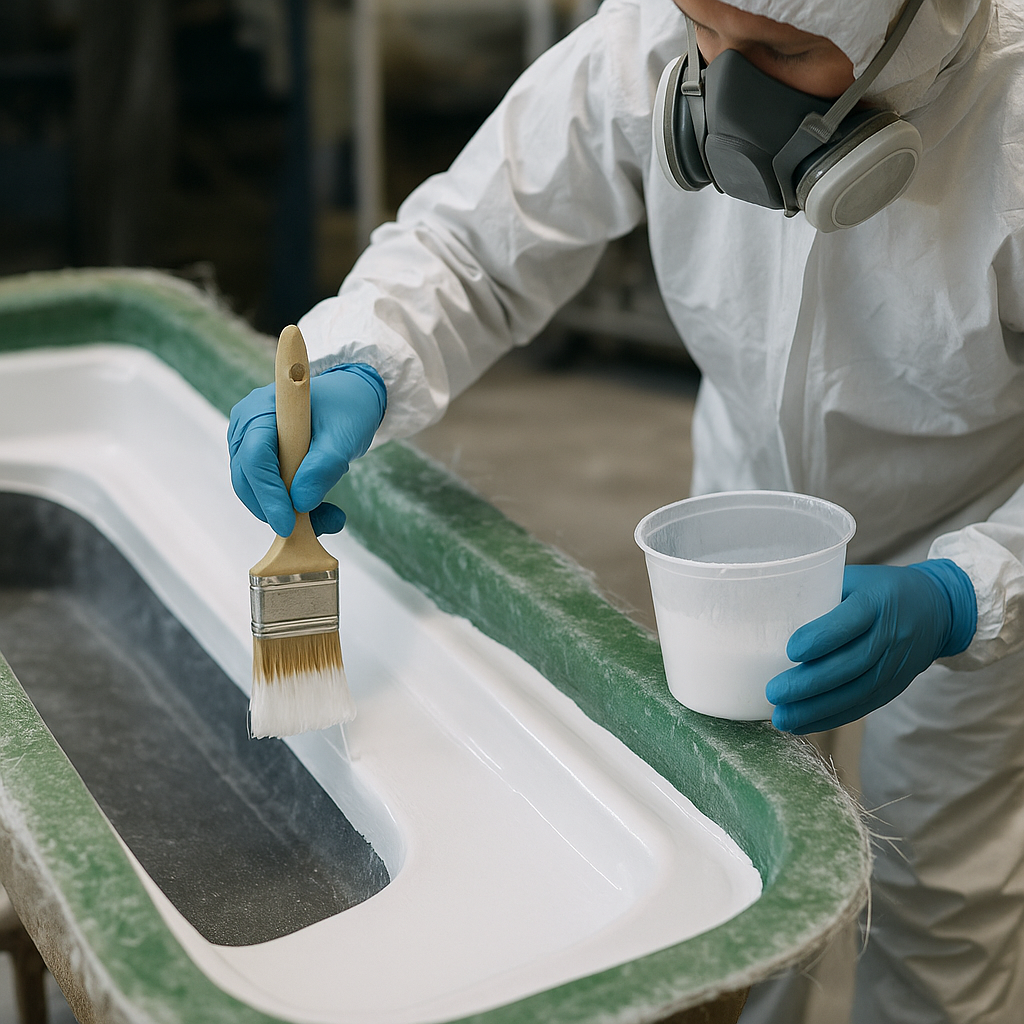
Gelcoat is a specialised resin used as a protective coating that enhances the durability and appearance of fibreglass surfaces. It plays a crucial role in construction by providing a smooth, glossy finish that is both visually appealing and protective against environmental elements. The marine, automotive, and construction industries frequently use gelcoat where components face harsh conditions or require resistance to water penetration.
Proper Gelcoat Handling
Storing Your Gelcoat Properly
-
Keep gelcoat in original containers with lids securely fastened
-
Monitor shelf life and practice good stock rotation
-
Store below 20°C; bring the gelcoat into a warm area (18-23°C) the night before use
Surface Preparation Guidelines
-
Clean the surface thoroughly with mould cleaner to remove dust and residue
-
Apply a release agent such as Tek-Kote semi-permanent type to the tool
-
Ensure new moulds are properly sealed
-
Maintain a dust-free environment during application
Essential Equipment and Workshop Setup
-
Verify spray equipment functionality and clean filters
-
Use the lowest possible gun pressure for a uniform spray pattern
-
Wear appropriate PPE at all times
-
Cross-hatch spray patterns for even coverage (aim for 500-600 microns wet film thickness)
-
Ensure your workshop is:
-
Dust-free
-
Well-lit
-
Properly ventilated
-
Maintained at 18-23°C
-
Application Techniques
Brush Application Best Practices
-
Use high-quality brushes with long bristles
-
Add 2% catalyst, adjusting for temperature and gel time
-
Keep catalyst levels no lower than 1% to achieve proper Barcol hardness
-
Mix catalyst thoroughly into the gel
-
Apply with even brush strokes to achieve 500-600 microns wet film thickness
-
Use a gel gauge to test thickness
-
Be careful not to overload corners, as excess gel can cause air entrapment and porosity
Confirming Your Gelcoat Mix Is Ready
After mixing gelcoat with catalyst, it should have a uniform consistency. Always add the recommended amount of catalyst (typically 2% by weight or volume) and ensure thorough mixing to prevent patchy and inconsistent curing.
Avoiding Common Mistakes
Application Pitfalls to Watch For
-
Do not apply gelcoat in direct sunlight or high humidity
-
Never rush surface preparation
-
Ensure proper catalyst mixing ratios
-
Avoid applying too thick a layer
-
For brushing, aim for 2 coats of 500-600 microns
-
For spraying, apply 2-3 coats of 200-300 microns, allowing time between coats for air to escape
Curing Considerations
-
Gelcoat typically begins gelling within minutes in the cup
-
Backup times are usually 1 hour depending on temperature and catalyst ratios
-
The surface is ready for backup when it feels tacky but doesn’t wet your finger
-
Never allow gelcoat to fully dry before backing up
-
Always back up the gelcoat within a few hours (under 8 hours) to prevent interlaminar adhesion issues
Customising and Maintaining Gelcoat
Gelcoat can be tinted using compatible pigments recommended by the manufacturer. Test colours on small areas before full application. For maintenance, clean regularly with mild soap and water, avoid harsh chemicals and abrasive tools, apply periodic waxing, and promptly address any chips or cracks.
Troubleshooting Common Faults
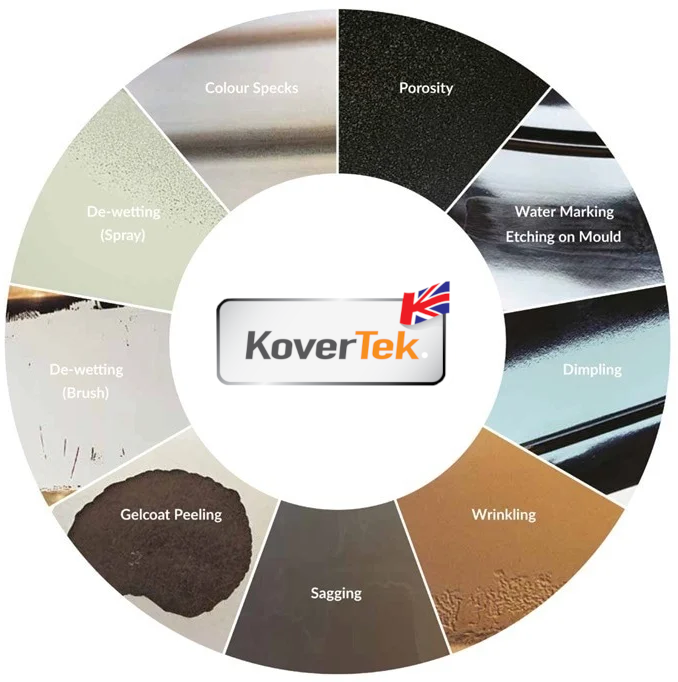
Identifying and Resolving Issues
Porosity:
-
Causes: Overly viscous gelcoat, rapid gelling trapping air, or application temperature too low
Wrinkling:
-
Causes: Gelcoat applied too thinly, premature backup layer application, or insufficient curing
Sagging:
-
Causes: Excessive thickness, prolonged geltime, or inadequate viscosity/thixotropy
De-wetting:
-
Causes: Insufficient gelcoat thickness, incompatible release system, or contamination
Peeling:
-
Causes: Fully cured gelcoat before backup, contamination, or extended geltime dissolving release wax
Colour Issues (specks, mottling):
-
Causes: Poor pigment mixing, contamination, improper spraying technique, or inadequate application
Dimpling:
-
Causes: Contamination, insufficient consolidation, or heavy wet-on-wet spray application
By following these guidelines, you can achieve professional results with your gelcoat applications and avoid costly mistakes that lead to repairs and rework.